
Are You Ready for the New Job Market? AI, AI Sir!
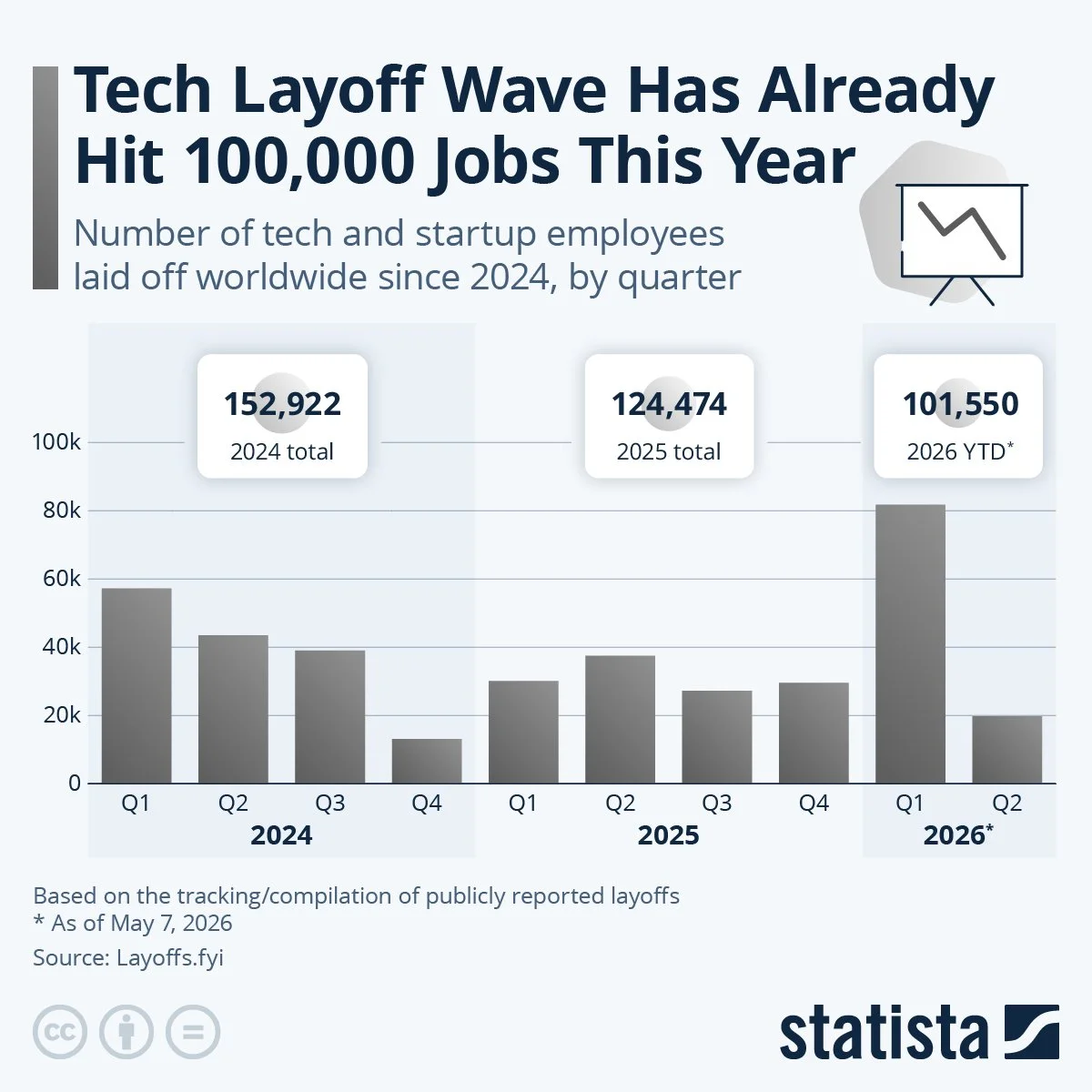
The velocity of AI development has triggered a global wave of anxiety regarding the future of work.
Headlines are dominated by two extremes: massive layoffs at tech giants and small-scale entrepreneurs claiming to have replaced their entire staff with autonomous agents.
But is this an existential threat to human labor, or a massive structural realignment?
To some extent, recent layoffs are a predictable correction by companies that over-invested in speculative ventures like the Metaverse. On the other hand, the drive toward automation is fueled by a new competitive reality.
The looming transformation is not the end of work, but the dissolution of "private knowledge" as a competitive advantage. To survive, the modern worker must transition from a specialist who executes tasks to an "AI Manager" who orchestrates outcomes.
The Great Democratization of Knowledge
Historically, we have divided the workforce into two blocks: Professionals (doctors, engineers, lawyers, etc.) who possess specific technical expertise, and Generalists (historians, researchers, HR reps, etc.) who focus on cultural and synthesized knowledge.
AI creates a traumatic shift for both, but specifically for the professional.
For decades, a specialist’s value was their "private knowledge"—the technical know-how acquired through years of schooling and experience. AI turns this "treasure chest" into a public utility. As soon as technical documentation or case studies are uploaded to the web, an AI agent can synthesize and deploy that knowledge instantly. Your decade of experience has been democratized; your competitive edge, nullified.
The generalists face a similar reality. Since their work—research, policy, and analysis—is largely already derived from and published in digital formats, AI can already leverage their entire field of study to generate recommendations and insights today.
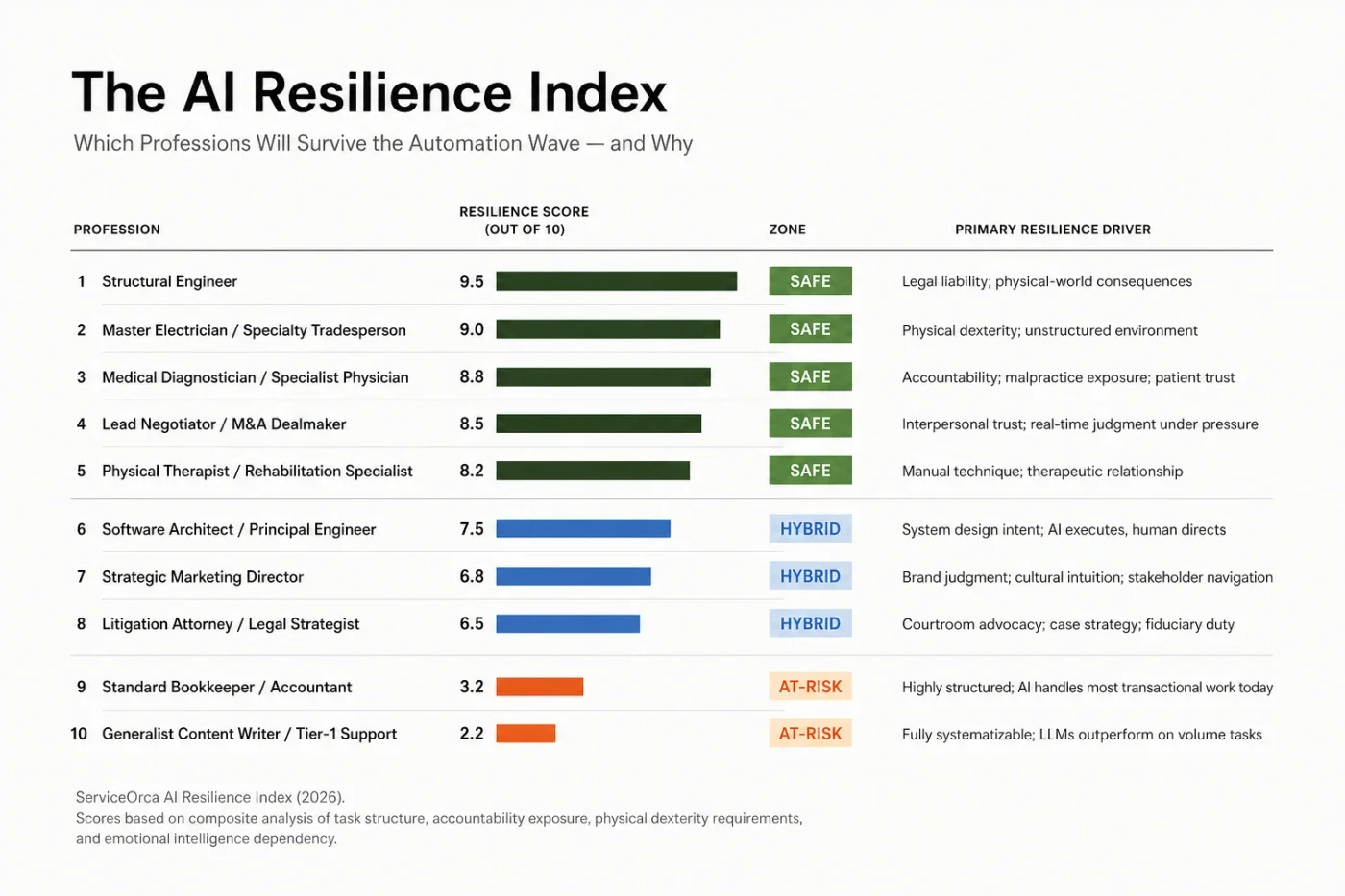
From Executor to Architect
If specialized technical experience no longer holds exclusive value, how do we compete?
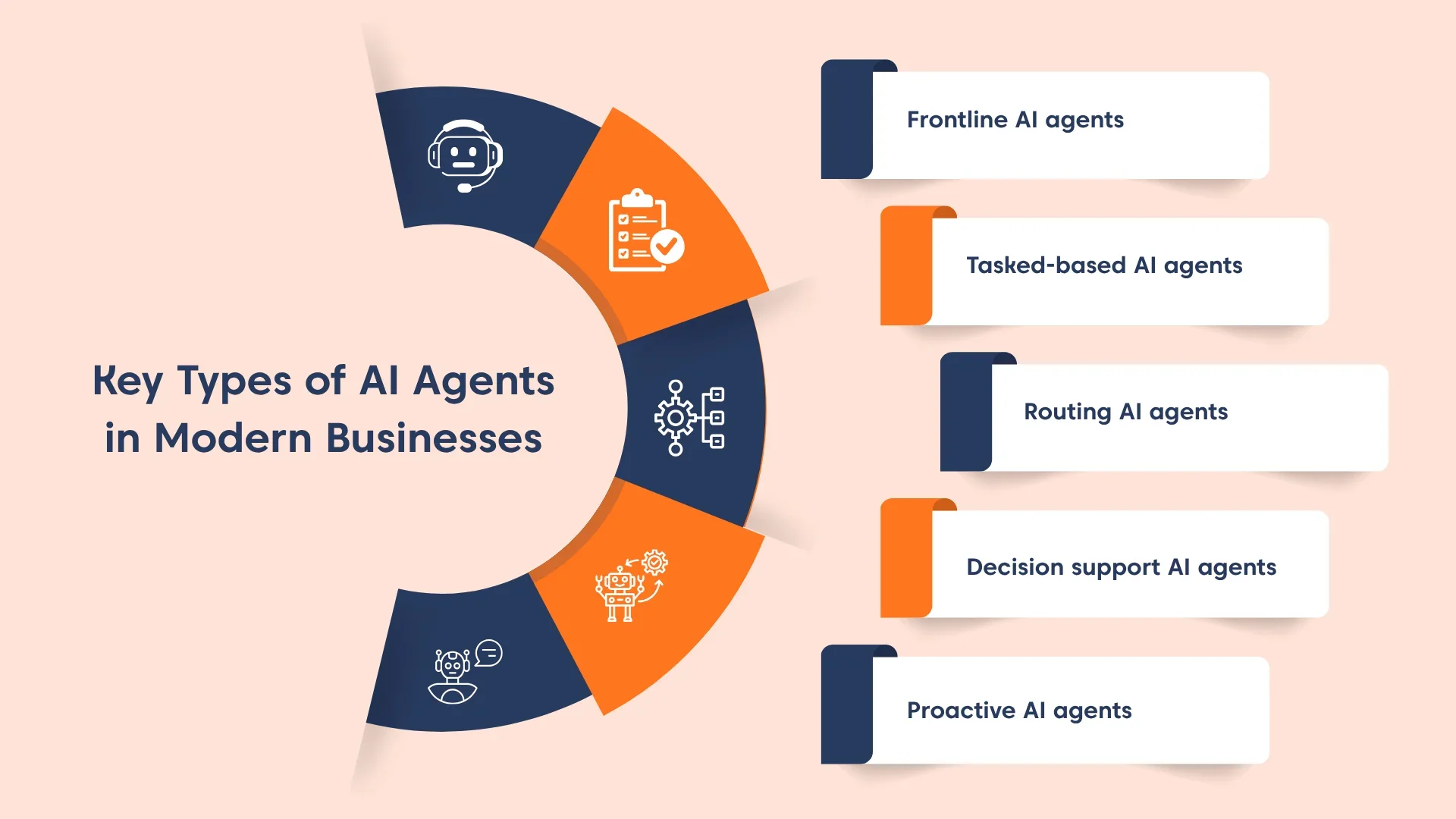
We must accept that pure execution—the "doing" of the work—will be transferred to AI. The new premium skill is Management.
I, as well as many others that are trying to wrap their heads around the potential futures of this field, envision the ideal future employee as an AI Agent Manager.
This individual will not arrive with a resume of tasks they can perform, but a catalog of AI agents they know how to direct. They will serve as the crucial link: collecting human requirements and "transcoding" them into precise logic blocks for AI specialized agents.
Consider a software project. A manager still needs to understand the necessity of back-ends, databases, security protocols, and compliance (like GDPR). Even if a "General Contractor" AI coordinates the project, the human manager must provide the precise vision and constraints. The revolution is shifting the value of work from "writing the code" to "defining the problem."
Historical Precedent: The Evolution of Skill
This shift is not entirely unprecedented. Every industrial and digital revolution has required a new "spin" on education.
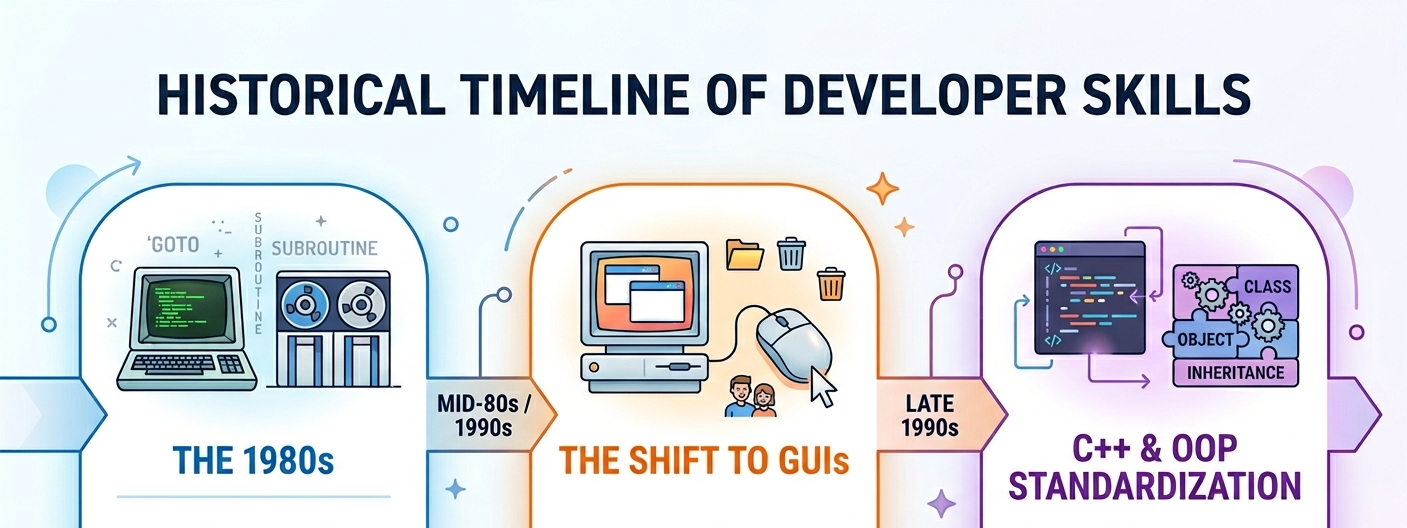
The 1980s: A developer needed to master Fortran or COBOL.
The Mid-80s/90s: The shift to Graphical User Interfaces (GUIs) necessitated an entirely new approach to computer usage. Everyone has a story about the first time they ever saw a mouse!
The Late 90s: The standardization of C++ and Object-Oriented Programming (OOP) forced developers to change how they structured logic.
The automotive industry followed a similar path. In the 1980s, driving was purely mechanical. Today, a driver manages a suite of systems: ABS, anti-collision sensors, and rear cameras. We have evolved from "operators" to "system supervisors."
The New Corporate Currency: Tokens
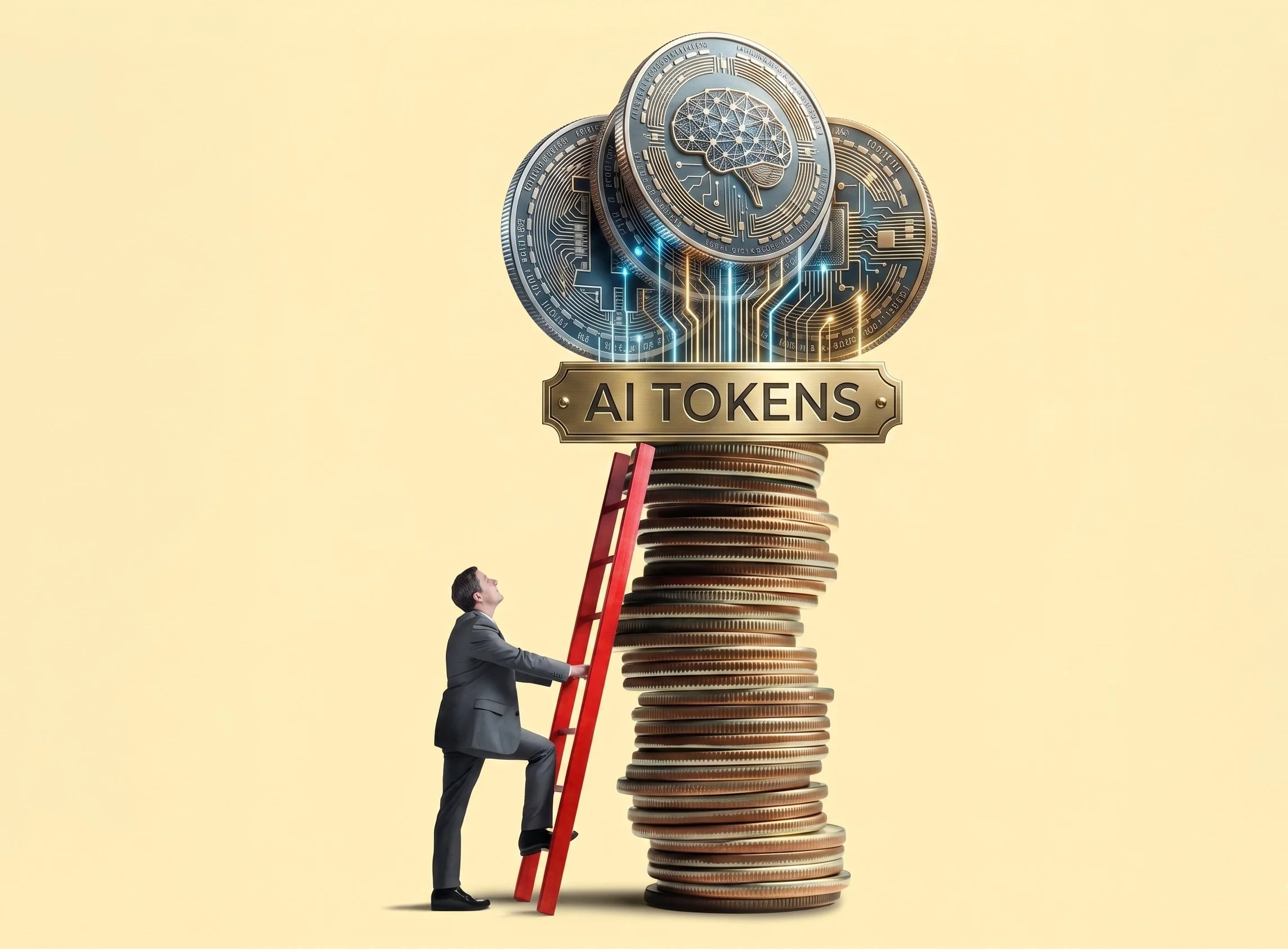
Jensen Huang, CEO of NVIDIA, recently articulated this shift by suggesting that engineers should no longer "code" in the traditional sense. He proposed a startling new metric: if an engineer earns $100,000, they should be expected to "manage" $250,000 worth of tokens (the currency of compute time for LLMs / AI Agents).
This introduces a new concept in business: the Token Budget. Soon, a token allowance will be a standard employment perk, right alongside health insurance and 401(k) matching. Companies will prioritize employees who can optimize this spending—those who can achieve the most "output" per token.
This isn't just a tech-sector phenomenon. Whether you are a lawyer, a salesperson, or an HR representative, your ability to automate your calendar, organize business travel, or vet health insurance plans through AI will be the baseline for your productivity.
The New Gatekeepers
This shift has even been changing how we find work.
Freelancers used to obsess over "soft" details: font choice, slide density, and catchphrases. But if your recruiter is an AI, these aesthetics are irrelevant. An AI agent doesn't care about your color palette; it cares about your structured data—your reputation, your publications, and your "social media impact" score.
To an AI, your professional life is essentially a JSON file. If you aren't legible to the agent, you don't exist to the client.
The Irreplaceable Human Soul

The Human Condition (La condition humaine) - René Magritte
However, this shift does not mean we become mere observers. In fact, it shines a spotlight on the qualities AI cannot replicate: the Human Condition.
Data from the World Economic Forum’s 2025 Future of Jobs Report indicates that as technical execution is automated, demand is surging for "human-centric" skills like creative thinking, resilience, and agility. While AI can process data, it cannot possess wisdom, ethical courage, or genuine empathy.
According to Workday’s 2026 AI Skills Revolution Report, 83% of business leaders agree that the rise of AI makes human skills more important, not less. A machine can simulate a supportive response, but it cannot "read the room" to sense the unspoken tension in a high-stakes negotiation or offer the authentic compassion needed to lead a team through a crisis—traits that Korn Ferry notes lead to 30% higher employee retention.
Companies will always need us for accountability and moral judgment—the ability to say "just because we can do this, doesn't mean we should."
Our lived experiences and ability to build trust through shared vulnerability are the "glue" of any organization that an algorithm will never be able to "scrape" or "learn."
Conclusion: The Infrastructure Imperative
We must stop viewing AI as the enemy and start viewing it as a mandatory ally.
The barrier to entry is lower than ever; one no longer needs a computer science degree to automate an Excel sheet or build a custom GPT. The excuse of being "too old" or "not technical" is no longer valid in a world where education must be a continuous, lifelong process.
We are entering an era where the "human element" is focused on strategic scaling rather than headcount.
To understand the scale of this shift, look at the big players. Even if Meta replaced its entire workforce with AI, payroll savings would only be roughly $27 billion, a fraction of the $145 billion infrastructure spend. The binding constraint on growth is now GPUs and the electricity to run them, not talent capacity. The reality of these cost ratios proves how the generalized statement many like to bandy about that AI will replace humans wholeheartedly because it’s cheaper is completely, patently false.
As the cost of "doing" for employees approaches zero, the value of "deciding" becomes infinite.
However, the machines can only determine the how; it remains the human's sacred duty to determine the why.
Our future success depends on a radical educational pivot: we must improve our technical literacy to manage the agents, while fiercely guarding the empathy and ethical judgment that make our leadership legitimate.
Whether you are a software architect or a plumber with a new robotic partner, the message is clear: the future belongs to those who can manage the machines without losing the soul that gives the work its purpose.
We must not just out-compute the competition; we must out-think, out-feel, and out-lead them.