
During the recent U.S. midterm elections, one surprisingly local issue kept surfacing on the campaign trail: the rapid, unchecked growth of AI datacenters. Everyday voters are increasingly worried about soaring utility bills, massive water consumption, and the constant noise pollution these facilities bring to nearby neighborhoods. Meanwhile, industry assurances that everything will "soon run on 100% renewable energy" are starting to ring hollow.
To understand why tech leaders are suddenly pitching sci-fi solutions—like launching datacenters into orbit—we first have to look at the physical bottlenecks colliding right here on Earth.
The Hardware Reality: Extreme Power and Heat
AI’s appetite for compute is growing exponentially, driven by power-hungry GPUs packed tightly into server racks:
Single-rack density: A single NVIDIA GB300 cabinet consumes up to 135 kW—more electricity than 100 average American homes. Next-generation racks are already pushing 250 kW.
Campus-scale demand: xAI’s Colossus 2 facility requires 1.5 GW for its servers alone—roughly double the power consumption of the entire city of San Diego. Even its initial active cluster of 110,000 chips draws 210 MW (averaging nearly 2 kW per chip once networking switches and storage are factored in).
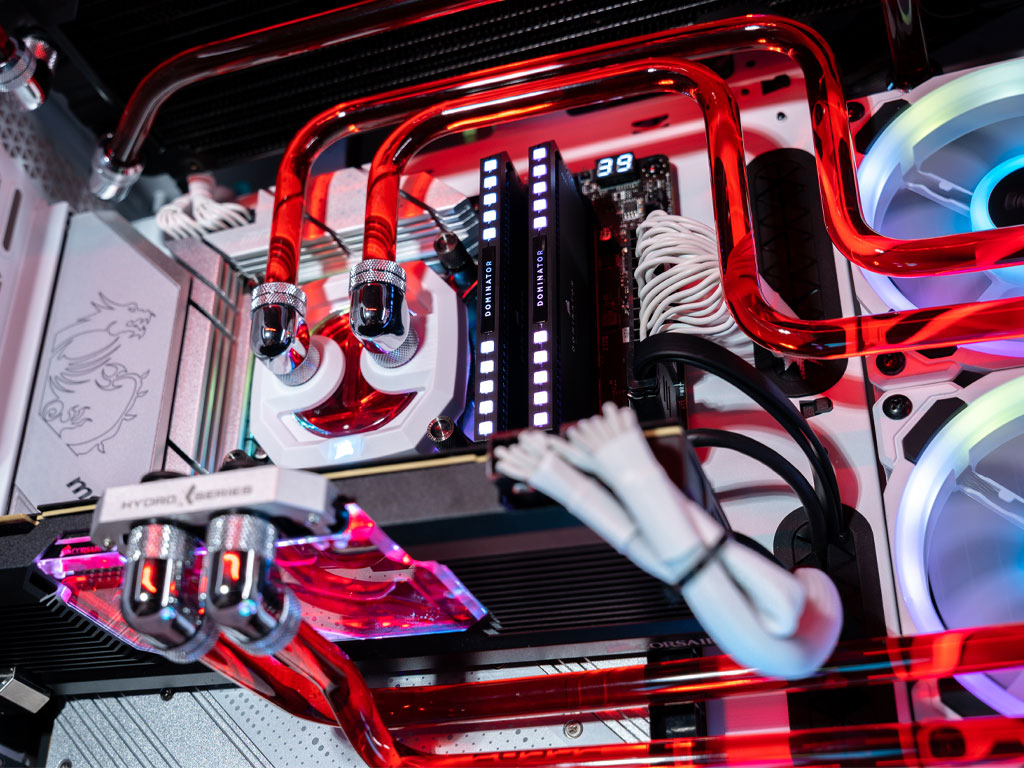
CLOSED LOOP COOLING SYSTEM
At these power densities, traditional air cooling—pushing chilled air through server aisles—simply cannot keep up. Liquid cooling is now mandatory. In a direct-to-chip liquid system, cold water mixed with chemical additives flows through tiny pipes directly onto a heat-exchanging plate sitting atop each chip, carrying heat away to an external loop.
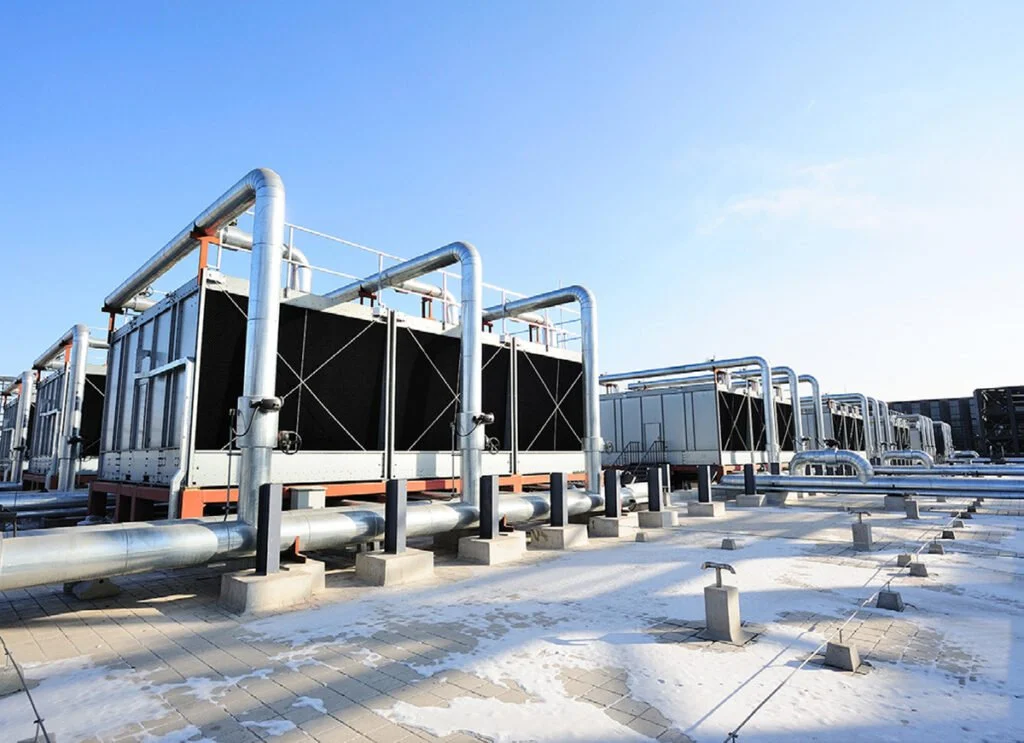
COOLING TOWERS
However, liquid cooling forces a difficult trade-off:
Closed-loop systems consume almost no water after the initial fill, but they rely on massive fan banks and compressors that spike electricity usage.
Evaporative cooling towers save electricity by letting water evaporate into the air, but they require millions of gallons of fresh water to be continuously replenished.
Grid Bottlenecks and Dirty Stopgaps
Even when operators solve the cooling problem, they hit a wall trying to plug into the power grid:
Multi-year grid delays: Upgrading electrical infrastructure to meet datacenter demand in Northern Virginia now takes 5 to 7 years.
Pipeline and turbine backlogs: Oracle recently had to delay an $18 billion datacenter project in New Mexico due to postponed gas pipeline connections. Meanwhile, GE Vernova—one of the world's largest power-plant turbine makers—is sold out for years, with new orders not delivering until 2031.
To bypass these multi-year waits, AI companies have turned to controversial, off-grid stopgaps:
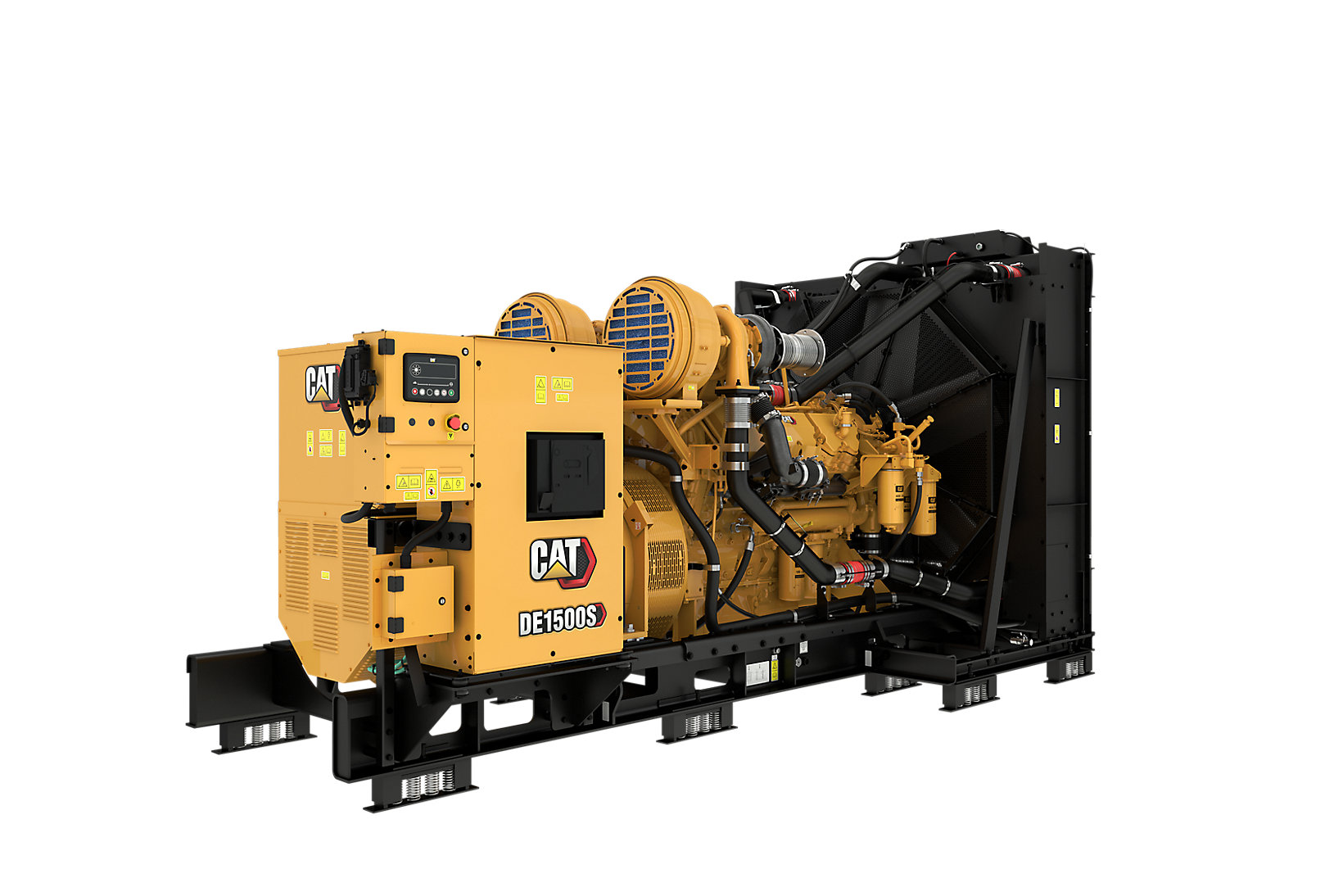
CATERPILLAR GENERATOR
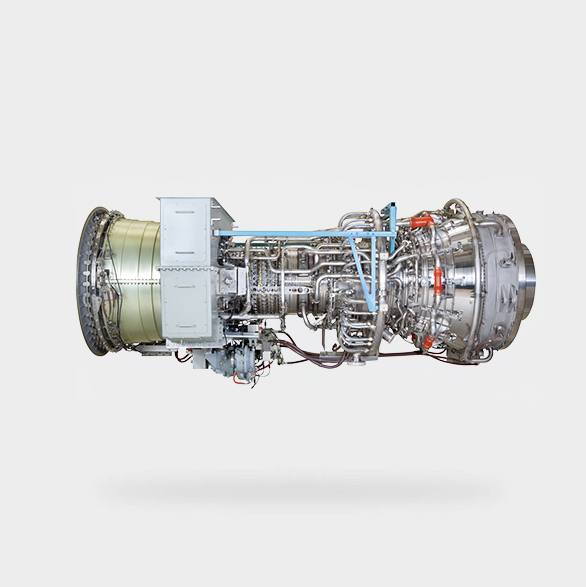
GE LM6000 JET ENGINE
Unpermitted gas turbines: A July 2026 Reuters investigation revealed that xAI installed 59 natural gas turbines for Colossus 2—primarily across the state line in Southaven, Mississippi—without federal clean-air permits, more than double what the company had previously disclosed. At full tilt, the site’s nitrogen oxide emissions alone rank it among the most polluting power plants in the country. Running 24/7, these turbines also generate constant noise levels between 40 and 70+ decibels at the property line.
Converted jet engines: Developers are buying aeroderivative turbines—essentially commercial jet engines modified to burn natural gas and spin an electrical generator instead of a front fan. AI infrastructure provider Crusoe has ordered 13 ProEnergy PE6000 units (built on GE jet engine cores, closely related to the GE LM6000) at 50 MW each, while other firms are retrofitting retired aviation engines.
Standalone industrial generators: Caterpillar has emerged as a major beneficiary of this power crunch, repurposing its plant in Wamego, Kansas, to build datacenter turbines and resuming production of its 10 MW generators (last produced in 2022) to meet surging Q4 2026 orders.
While jet engines and gas generators solve immediate electricity shortages, they carry a steep environmental cost—burning fossil fuels nonstop and subjecting neighboring communities to relentless noise from turbines and cooling fans.
The Pitch: Move AI Into Orbit
Faced with community pushback, strict permitting, and maxed-out power grids, tech giants have begun pitching an audacious escape route: space.
An NVIDIA-backed startup (Starcloud) has already tested orbital computing, Google is actively pursuing its Project Suncatcher moonshot to put TPUs in orbit, and xAI has floated visions of 1 GW—and even 1 TW—orbital datacenters.
On paper, the pitch sounds seductively simple: AI needs massive power and cooling, sunlight in orbit is available 24/7, and space is freezing cold. Unfortunately, basic engineering and physics tell a very different story.
Reality Check 1: Launches, Failures, Debris, and Obsolescence
Before we even get to thermodynamics, orbital datacenters face four brutal logistical hurdles:
The rocket bottleneck: Putting gigawatt-scale infrastructure into orbit would require thousands of heavy-lift launches—a fleet capacity we do not currently have, carrying an astronomical price tag and a massive upper-atmosphere emissions footprint.
Zero maintenance: Once hardware is in orbit, nobody can walk down an aisle to reseat a loose cable, swap a dead drive, or replace a fried GPU. On Earth, roughly 1% of hard drives and just under 1% of SSDs fail every year. Worse, during Meta’s 16,000-GPU Llama training run, the cluster suffered roughly 400 interruptions in just two months—about half caused by GPU or memory failures (roughly one hardware failure every 7 hours). In space, without repair crews—and under constant bombardment from cosmic radiation and launch vibrations—failing chips simply become dead weight.
Space debris and micrometeorites: A multi-square-kilometer structure in Low Earth Orbit is a giant target for orbital debris and high-velocity micrometeorites. A single impact puncturing a liquid-filled cooling loop would disable an entire compute cluster and scatter hazardous debris into busy orbital lanes.
Rapid obsolescence: Even if engineers radiation-hardened GPUs to survive five years in orbit, AI hardware becomes obsolete in 18 to 24 months. On Earth, upgrading to the next NVIDIA generation is a routine rack swap. In orbit, your multi-billion-dollar constellation quickly turns into outdated space junk delivering a fraction of modern efficiency.
Reality Check 2: The Physics of Solar Power and Heat Rejection
In orbit, there is really only one viable power source: solar panels. Near Earth, sunlight delivers roughly 1 kW of raw solar energy per square meter. Accounting for ~20% solar cell conversion efficiency and real-world system losses, powering a single 120 kW to 135 kW GPU rack requires a solar array roughly the size of one to two basketball courts.
Cooling is an even bigger trap. Every watt of electricity fed into a computer eventually turns into heat. On Earth, we shed heat through conduction (direct solid contact), convection (moving air or liquid), and radiation (infrared waves). In the vacuum of space, there is no air and no water—so conduction and convection do not exist. Thermal radiation is your only option, and at chip operating temperatures, radiation is painfully slow. That is the exact reason a vacuum-insulated thermos keeps your coffee hot for hours.
At chip temperatures (~300 K to 320 K, or 27°C–47°C), active liquid cooling on Earth can strip away 1,000 to 10,000 W/m² per degree of temperature difference. In space, radiation sheds closer to 5 W/m² per degree.
As a result, cooling a single 120 kW GPU rack in orbit requires roughly 350 to 450 m² of dedicated radiator panels. For perspective, the International Space Station (ISS) relies on six radiator wings totaling ~500 m²—weighing over 6,000 kg—just to dissipate 70 kW of heat. In other words, cooling a single AI server rack requires nearly the entire radiator system of the International Space Station, and a next-gen 250 kW rack would require two.
When you scale those power and cooling requirements to real datacenter sizes, the numbers become staggering:
| Orbital Datacenter Scale | Solar Panel Area Required | Radiator Area Required | ISS Radiator Equivalent |
|---|---|---|---|
| 1 MW (Small cluster) | ~10,000 m² (~2.5 acres) | ~3,500 m² | ~7 ISS stations |
| 1 GW (Hyperscale campus) | ~10 km² (~3× Central Park) | ~3.5 km² | ~7,000 ISS stations |
| 1 TW (xAI long-term pitch) | ~10,000 km² (~13× New York City) | ~3,500 km² | ~7,000,000 ISS stations |
Where Orbital Compute Makes Sense and What We Should Do Instead
To be fair, putting computers in orbit is not completely useless. Orbital edge computing—processing raw imagery directly aboard Earth-observation or defense satellites so they only have to beam small, actionable insights down to Earth instead of raw petabytes—makes genuine engineering sense.
Training and serving frontier AI models for millions of users on Earth, however, is a completely different beast. Even if solar efficiency improves, radiators get lighter, and chips become radiation-hardened, launching gigawatt-scale datacenters into orbit remains an economic and environmental non-starter—especially once you factor in the immense bandwidth and latency challenges of beaming massive datasets back and forth to the ground.
Instead of trying to outrun physics with rockets, the smarter path is right here on Earth: designing more power-efficient chips, building smaller, decentralized clusters that don't overwhelm local grids, and optimizing software. As China’s DeepSeek demonstrated in early 2025 by training frontier-level models at a fraction of traditional energy and hardware costs, algorithmic breakthroughs can solve our energy bottleneck far faster—and far cheaper—than spaceflight ever could.
More broadly, the orbital datacenter hype exposes a blind spot in how the AI industry thinks about scale. For the past few years, progress has been defined almost entirely by brute force: bolting together ever-larger clusters of power-hungry silicon and demanding entire power plants to feed them. Now that local communities, water tables, and aging electrical grids are pushing back, treating space as an escape hatch avoids the harder—and far more productive—engineering work of doing more with less.
The real frontier isn't launching server racks into vacuum; it's rethinking how we build and run computing on the ground. That means shifting the industry's north star from raw FLOPS to intelligence-per-watt, co-locating modular clusters directly with curtailed wind and solar power, capturing waste heat for nearby cities and factories instead of venting it into the sky, and designing workloads that flex with grid demand rather than breaking it.
Space will always be indispensable for global communications, navigation, and looking back at our own planet. But when it comes to heavy AI computing, Earth's gravity, atmosphere, and water aren't limitations holding us back—they are the greatest thermodynamic advantages we have. Rather than chasing sci-fi workarounds in orbit, the true moonshot is building an AI infrastructure that our own planet can actually sustain.
*For additional context on the local environmental backlash referenced in this piece, watch the video report on xAI Runs Unpermitted Gas Turbines Near Black Communities, which covers the Southaven, Mississippi turbine investigation and community response.
**Header image illustration credited to Getty Images/sonmez karakurt