
Want to go to Mars? No thanks.
Main Logo and Promo of the Artemis Program
In a few short weeks, a NASA starship will ignite its engines, carrying a human crew back toward the silver heights of the Moon, where it will complete one full orbit before returning to Earth.
It’s a historic moment, marking the first of many planned step towards our return to the lunar surface since the final dust settled on the Apollo program over fifty years ago.
But as we prepare for this new era of the Artemis Program, a glaring question hangs in the vacuum of space:
Why did we wait so long?
While countries like China, India, and Japan have successfully landed robotic rovers on the lunar regolith in recent years, NASA’s human missions seemed to stall after Apollo 17 departed in 1972. To understand this half-century gap, we have to look past the heroics of the sixties and confront the "crude reality" of early space flight: it was less a calculated voyage and more of a high-stakes game of Russian roulette.
The Illusion of Safety in the Apollo Era
The reality is that the Apollo era was a gamble. While the engineering was a masterpiece of its time, the Apollo Guidance Computer (AGC) operated at a speed of 0.043 MHz with just 4 KB of RAM—powerless compared to a modern toaster.
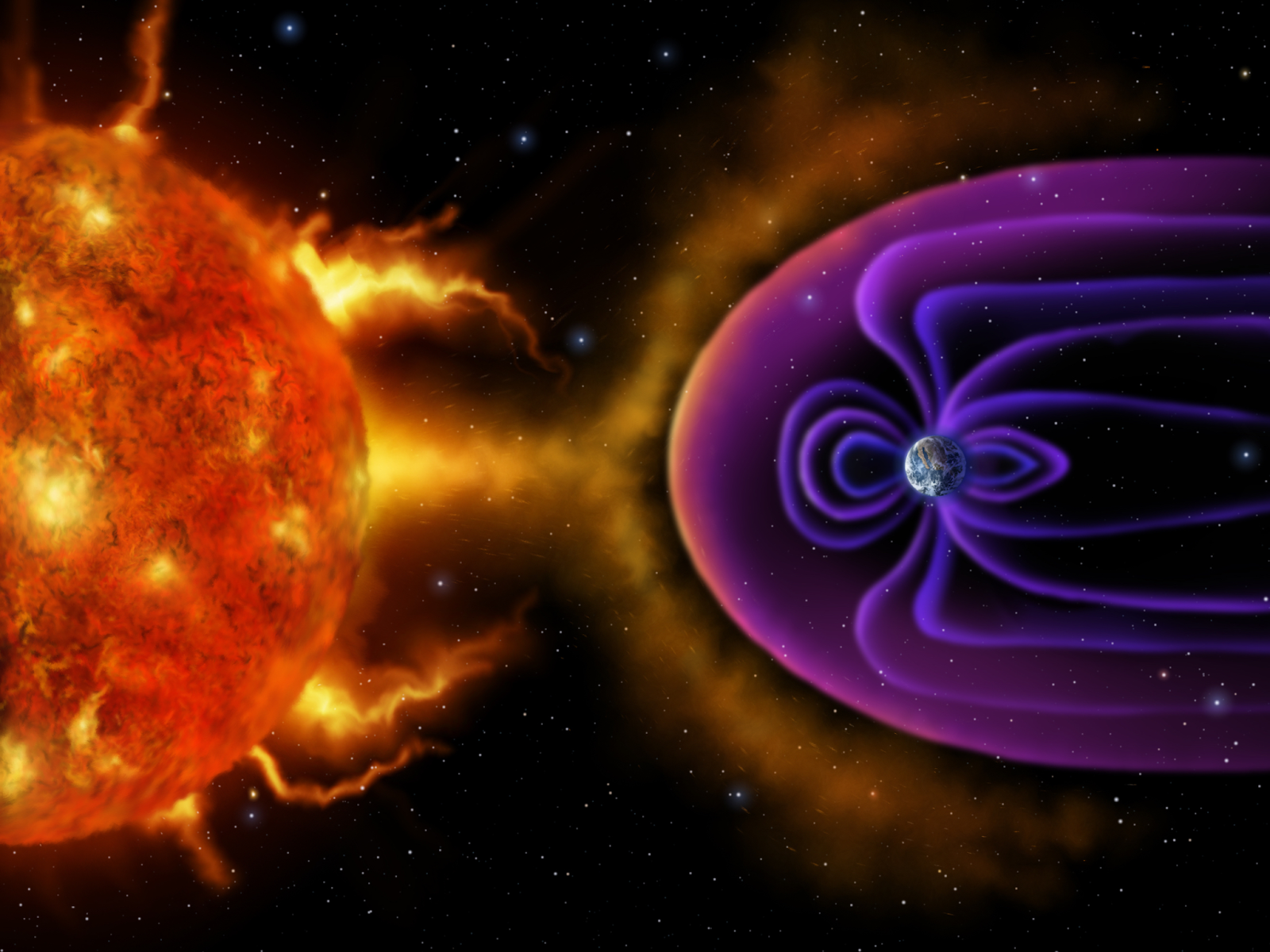
How Earth's Magnetic Field Protects Us From Solar Radiation
We often admire the bravery of the pioneers who went up in those capsules, but the technical constraints they operated under are staggering. While solid testing mitigated mechanical failure, the true dangers were environmental and invisible—specifically, cosmic radiation.
The aluminum skin of the Apollo capsules offered virtually no protection against high-energy particles. The only reason those early astronauts survived was the brevity of their missions; an eight-day round trip is a small window for exposure. Even then, luck played a massive role.
In August 1972, a massive solar storm erupted between the Apollo 16 and 17 missions. Had a crew been in transit, the sudden surge of high-energy protons would have caused acute radiation sickness or death.
Yet, even if we had mastered the radiation of the journey, the destination itself held a microscopic threat that we were wholly unprepared to manage.
The Hidden Enemy: Lunar Regolith
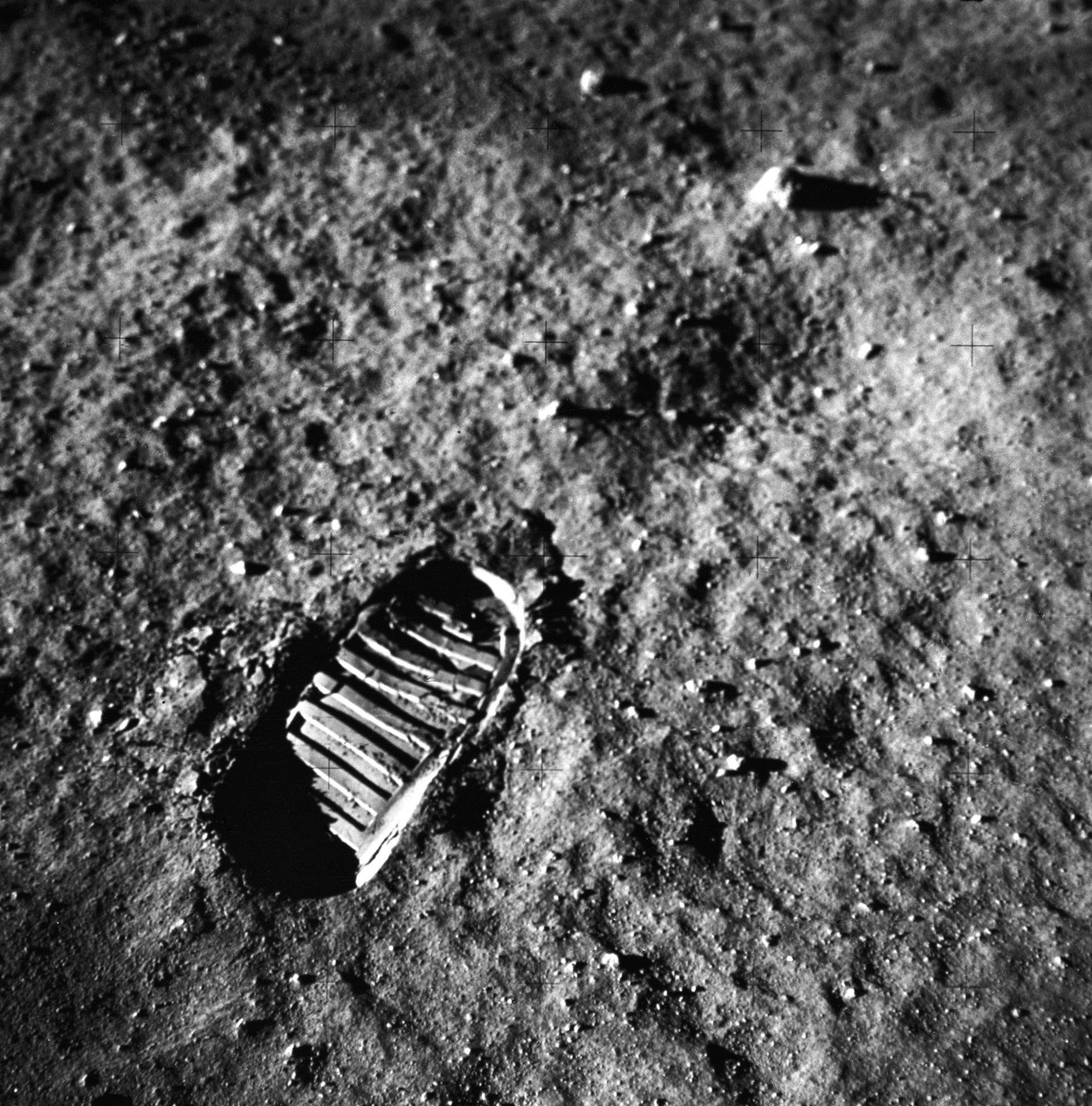
A close-up view of an astronaut’s footprint in lunar regolith, photographed by a 70 millimeter lunar surface camera during the Apollo 11 extravehicular activity. Source: NASA
The Moon tries to kill you in unexpected ways. Its surface is covered in regolith, a term coined in 1897 by geologist George P. Merril by merging the Greek words rhegos, 'blanket', and lithos, 'rock'.
On Earth, wind and water erode sand into rounded grains. On the Moon, without an atmosphere or weather patterns, every speck of dust is a microscopic razor created by eons of meteorite impacts.
This dust is a mechanical nightmare. During Apollo, these abrasive particles penetrated spacesuit joints, scratched visors, and irritated the lungs of astronauts inside the Eagle capsule.
Furthermore, regolith is a potent insulator. If a layer settles on a suit or instrument, it prevents heat from radiating away into the vacuum, effectively "boiling" the electronics–or the human inside.
This environmental hostility creates a constant physical strain on the crew, highlighting a broader issue: the extreme biological fragility of the human body in deep space.
The Sickbay in the Stars
We also cannot overlook our inherent incompatibility as humans with the vacuum of space.
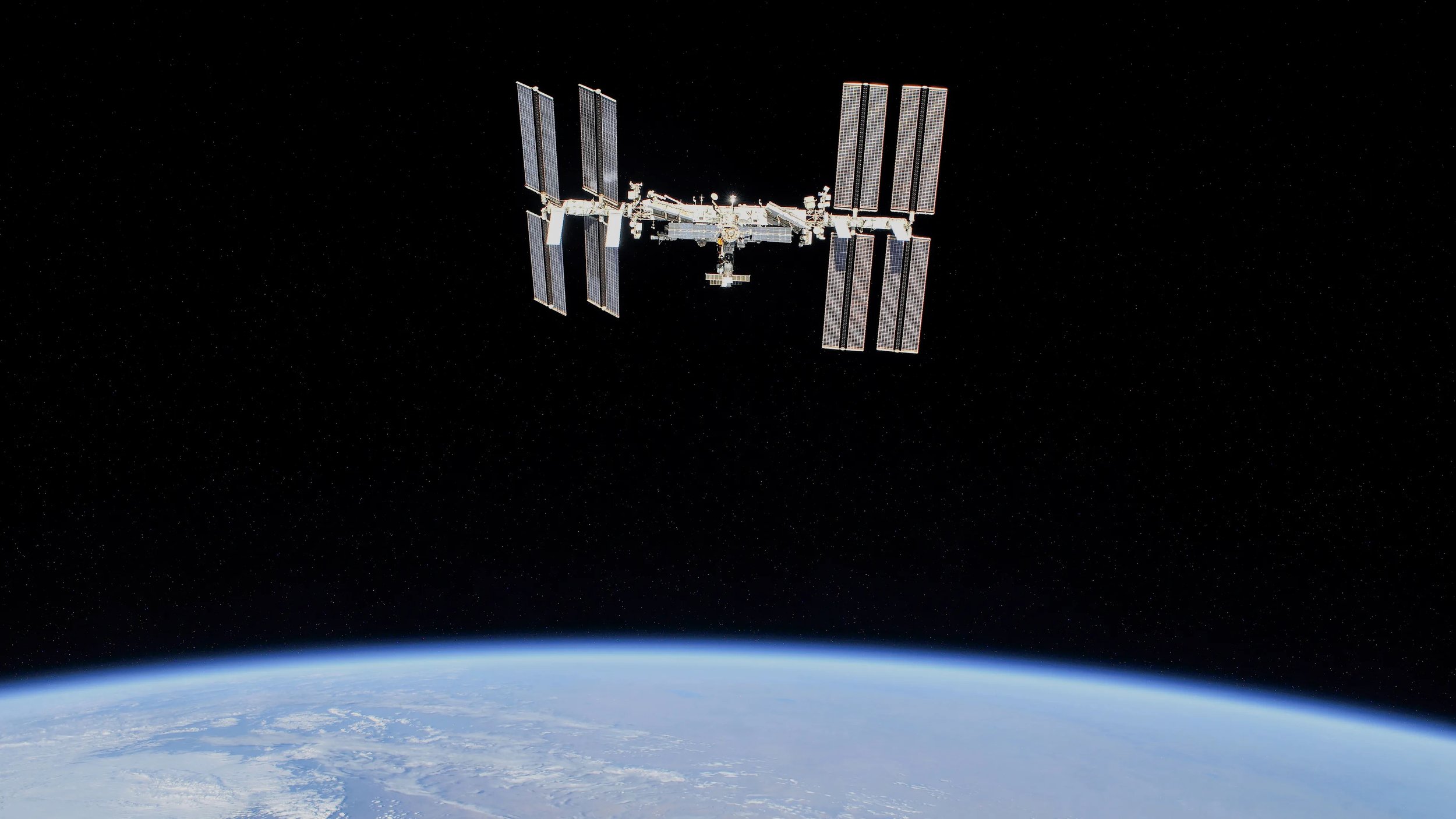
International Space Station (2026, NASA)
We’ve seen how quickly things go wrong even in Low Earth Orbit (LEO). During Apollo 13, Fred Haise Jr. developed a serious kidney infection mid-flight. More recently, in January 2026, we witnessed the first-ever emergency medical evacuation from the ISS when astronaut Mike Fincke required a rapid SpaceX rescue mission for an undisclosed medical incident.
If a medical emergency is difficult to handle 250 miles above Earth, it becomes a death sentence when you are 250,000 miles away on the Moon—or months away on Mars.
It’s this massive difference in distance and danger that makes the argument that we should forgo lunar exploration for the Red Planet fundamentally premature.
The Mars Mirage: A Category Error
While the Artemis program aims to start with a lunar base and work up its way to potential Mars exploration over the course of years, many argue against that, saying Mars should be the immediate goal and the only logical next step of space exploration.
To that, I say: that kind of thinking is a massive category error.
The jump from the Moon to Mars isn't simply just a longer trip; it’s a leap into a hostile wilderness for which we lack even a basic map.
The Refueling Gamble and the Radiation Trap
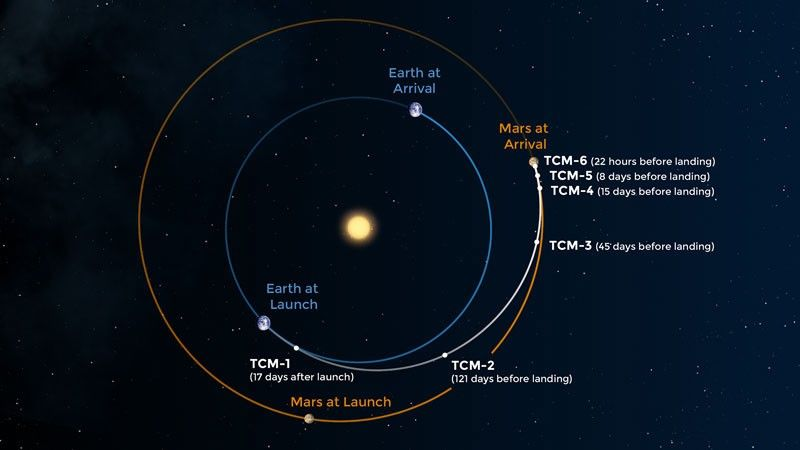
An illustration of the route the robotic lander InSight (Interior Exploration using Seismic Investigations, Geodesy and Heat Transport) took to get to Mars in 2018. Source: NASA.
SpaceX’s Starship currently aims for a 100-day transit using orbital refueling. While common for military aircraft, transferring cryogenic rocket fuel at 17,500 mph (28,000 km/h) in zero gravity has never been attempted. It is a mandatory hurdle, because without it, we can’t even leave Earth’s orbit with enough speed to survive. Even with a "fast" 100-day transit, we are extending lethal radiation exposure from an eight-day Apollo round trip to a minimum of 200 days for a round trip.
To manage that issue, most current plans for radiation "safe rooms" use water canisters to filter—not block—high-energy particles.
Here lies a dark irony: as the crew drinks the water and consumes the food, their radiation shield literally disappears.
Using lead shielding, the only thing that we are certain, at least for now, would effectively protect our astronauts is a non-starter. At a ratio of 27 kg of fuel for every 1 kg of payload, the weight of even just one lead-lined room would keep the ship grounded forever.
The Gravity Trap: No Way Back
We must be honest about the "one-way" nature of current Mars proposals. Mars is not the Moon.
With 38% of Earth’s gravity and 10% of its mass, you cannot blast off with a small lunar-style engine. Leaving Mars requires a massive rocket, a launchpad, and a manufacturing infrastructure that does not exist.
To return, we would need to find, refine, and store massive amounts of fuel on a barren planet. Until we can build a literal "Cape Canaveral" on the Martian dunes, any human landing is effectively a permanent stay.
The Farming Failure
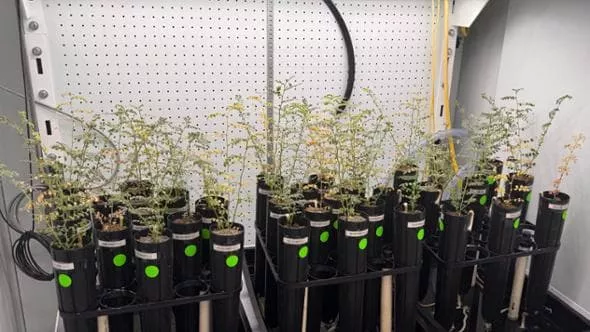
Chickpeas grown in a mixture that included lunar soil simulant inside a climate-controlled growth chamber at Texas A&M University in College Station, Texas, U.S., seen in this photograph released on March 5, 2026. Jessica Atkin/Handout via REUTERS
Hollywood’s The Martian made space farming look like a matter of sheer will. The reality is grimmer.
Recent experiments using lunar regolith simulant mixed with Earth soil, earthworm compost, and mushrooms attempted to grow chickpeas. The addition of these materials managed to make the regolith permeable to water–an important feature of earthbound dirt–but it still remained laced with heavy metals. As a result, while the plants sprouted, they failed to reach maturity.
Even if we eventually coax a harvest from Martian dirt, we face a toxicological mystery: would those chickpeas be "bio-accumulators" of Martian toxins? Would our own food start to slowly poison us? We have no idea.
We are decades away from a "proper recipe" for fertile space soil.
Remember Regolith?
On the Moon, regolith is a mostly static nightmare of jagged glass. On Mars, that same material becomes a dynamic atmospheric hunter.
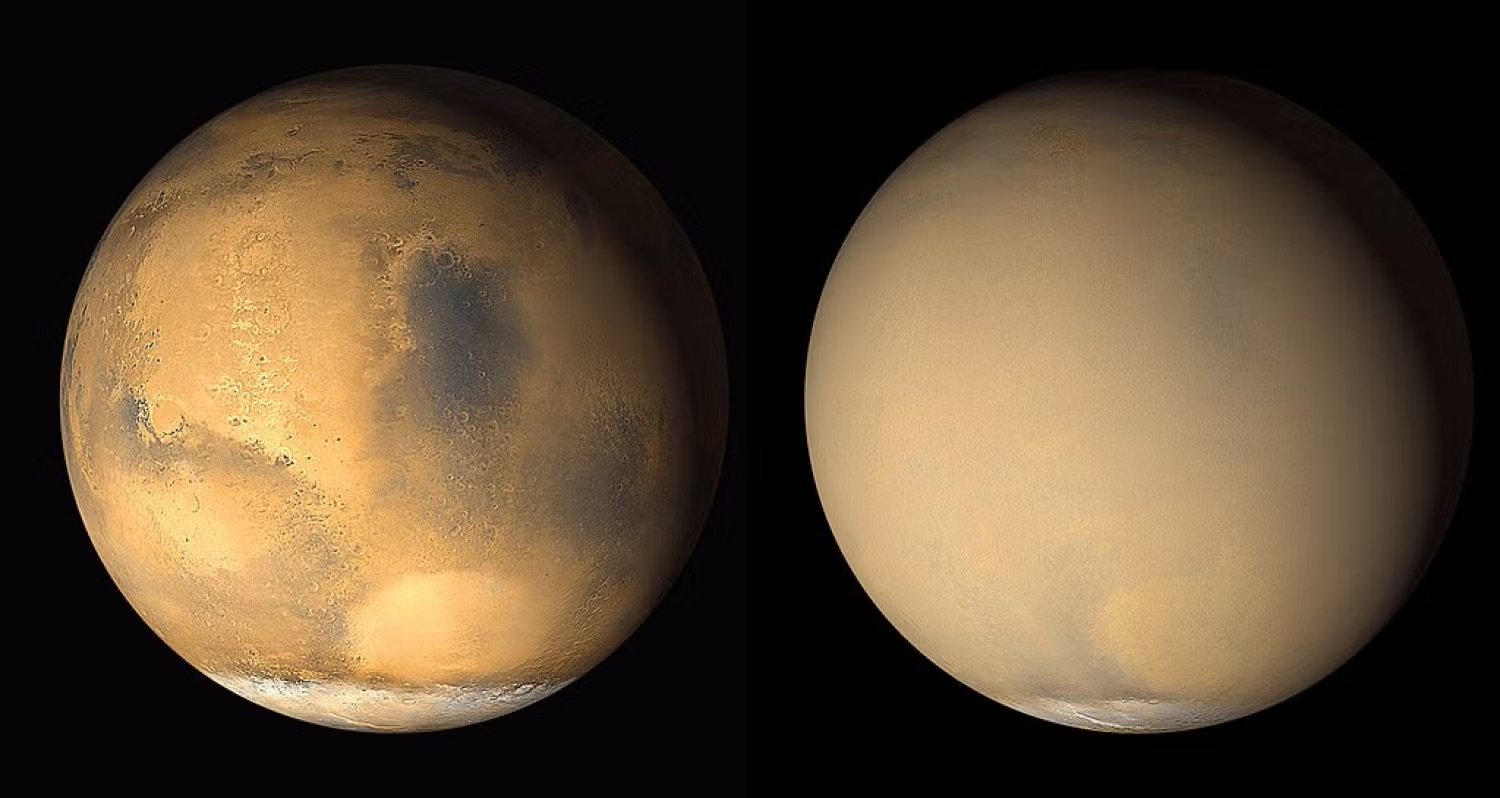
Mars seen before, left, and during, right, a global dust storm in 2001. (Credit: NASA/JPL/MSSS)
While lunar dust remains largely where it’s stepped on, moving only when something else moves it, the thin Martian atmosphere facilitates massive, planet-wide dust storms that turn the regolith into a relentless abrasive.
These storms don't just obscure vision; they carry ultrafine particles that infiltrate the smallest seals of a habitat and coat solar panels in a layer of clingy, electrostatic grime. Since there is enough wind to move the soil but not enough density to smooth it out through traditional erosion, the grains remain sharp enough to chew through suit fabrics and mechanical joints over time.
Beyond the mechanical wear, the chemical composition of Martian regolith introduces a level of toxicity that the Moon simply doesn't possess. The soil is laced with perchlorates—oxidizing salts that are hazardous to human biology, specifically the thyroid.
This means the "dust" isn't just a nuisance for filters and bearings; it is a biohazard.
Every time an astronaut would potentially be cycling through an airlock, they wouldn’t just be fighting to keep the sand out of machinery—they’d be struggling to keep a chemically reactive poison out of their living quarters.
While the lunar surface is a placid lake of razor blades—dangerous only when disturbed—the Martian surface is a swarm of poisonous tornadoes made of ground glass. On the Moon, the threat is passive and patient, waiting for a boot print to kick it into a seal or onto a spacesuit.
On Mars, the threat is almost predatory, an active participant in the planet's weather, fueled by an atmosphere that weaponizes its toxic soil and hunts for any weakness in any potential traveler’s defenses.
The Mystery of Life: Space Babies
If a colony is the goal, reproduction is the requirement. Yet, we have zero data on human reproduction in low-gravity or high-radiation environments. From the moment of fertilization to the complexities of a sterile delivery room, we are flying blind.
A medical emergency on the ISS in January 2026 required a SpaceX rescue mission from just 250 miles up. On Mars, there is no rescue. We don't know if a fetus can develop without genetic corruption, or if a "space baby" could ever survive the transition to Earth's gravity. We would need to monitor "space-born" generations for decades before we could even remotely claim that Mars is habitable.
Looking Forward: The Moon as Our Laboratory
The 50-year delay becomes understandable after considering everything we’ve covered here today.
Ultimately, the choice to stop sending humans into deep space and to other celestial bodies wasn't due to a lack of ambition, but a shift in focus.
With the geopolitical tensions that characterized the "Space Race" of the 60s and 70s diverted by the USA's victory, the pressure to risk human lives for headlines waned. NASA pivoted to the ISS to delve deeper into the fundamentals of long-term survival and to develop better spacesuits.
While visionaries sell the idea of a Mars colony in the next decade, a more realistic view suggests we are still at the starting line.
The Moon must serve as our ultimate laboratory. By building a permanent base there, we can solve the puzzles of radiation, farming, and medical safety in a place where "home" is only three days away.
Mars may be the goal of the next century, but the Moon is the classroom where we must first learn how to stay alive.